

Housing Pathways and Affordability
The rising cost of housing has been an ongoing issue in WA and nationally. House prices and rents are escalating at a rate that many households find hard to keep pace with and many young Australians continue to face severe barriers to accessing home ownership. Homelessness is also a growing concern in both regional and metropolitan areas. On the other hand, among older Australians, a major source of financial security is the wealth stored in the family home. Indeed it often represents a nest egg that can mean the difference between a modest and comfortable retirement. Projects under this research theme also delve into a range of issues related to housing affordability and housing security over the life course, and the ways in which housing assets are relied upon to fund retirement needs.
Related Projects
See All “What works” to sustain Indigenous Tenancies in Australia
 Relationships between metropolitan, satellite and regional city size, spatial context and economic productivity
 Housing impacts for Australian children and adolescents; including Indigenous children in remote Australia
 Strategies to enhance housing security for WA’s older renters
 Inquiry into pathways to housing tax reform
 Housing tenure, mobility and labour market adjustments
Related Publications
See All View the presentation by lead authors Dr Adam Crowe, Research Fellow, Curtin AHURI Research Centre, and Professo Alan Duncan, Director, Bankwest Curtin Economics Centre, from the launch of the report Building the Dream: The future of Western Australia’s construction industry, on... Read article
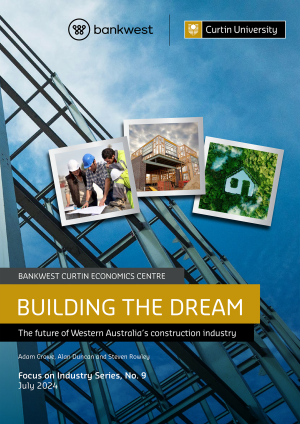 Watch the full report launch online here, and access the presentation slides here. Building the Dream, the ninth report in the BCEC Focus on Industry series, reveals that at current rates of dwelling completion, Western Australia will fall well short... Read article
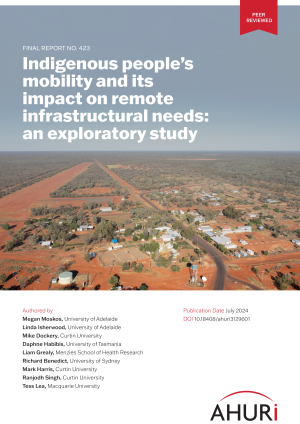 With Indigenous populations at risk of higher rates of infection and more serious disease than non-Indigenous populations, a policy of returning to remote communities (i.e. Return to Country) was encouraged during the COVID-19 pandemic. This policy led to high expectations... Read article
 2023 was another busy year for the Bankwest Curtin Economics Centre (BCEC). BCEC’s publications were widely read with almost 7,000 downloads. Media mentioning BCEC was widely consumed, reaching nearly 20 million people across television, print, radio and online. Thematically, housing... Read article
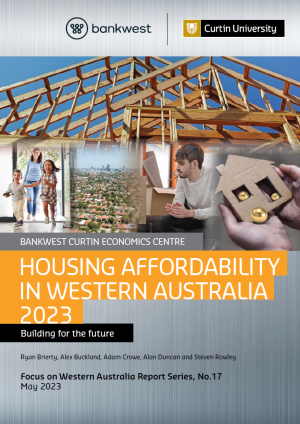 The latest report in the BCEC Focus on WA report series, Housing Affordability in Western Australia 2023: Building for the future, compares housing affordability in WA to other jurisdictions for both homeowners and renters to get a sense of where WA sits. This... Read article
 View the presentation by Professor Alan Duncan, Director, Bankwest Curtin Economics Centre, and Professor Steven Rowley, Director, Australian Housing and Urban Research Institute – Curtin Research Centre, from the launch of the report Housing Affordability in Western Australia 2023: Building... Read article
 The Bankwest Curtin Economics Centre team acknowledges the Wadjuk Nyungar people as the traditional owners of the land on which the Centre is situated.